White staining vs rust staining on a concrete bridge: what each one tells you
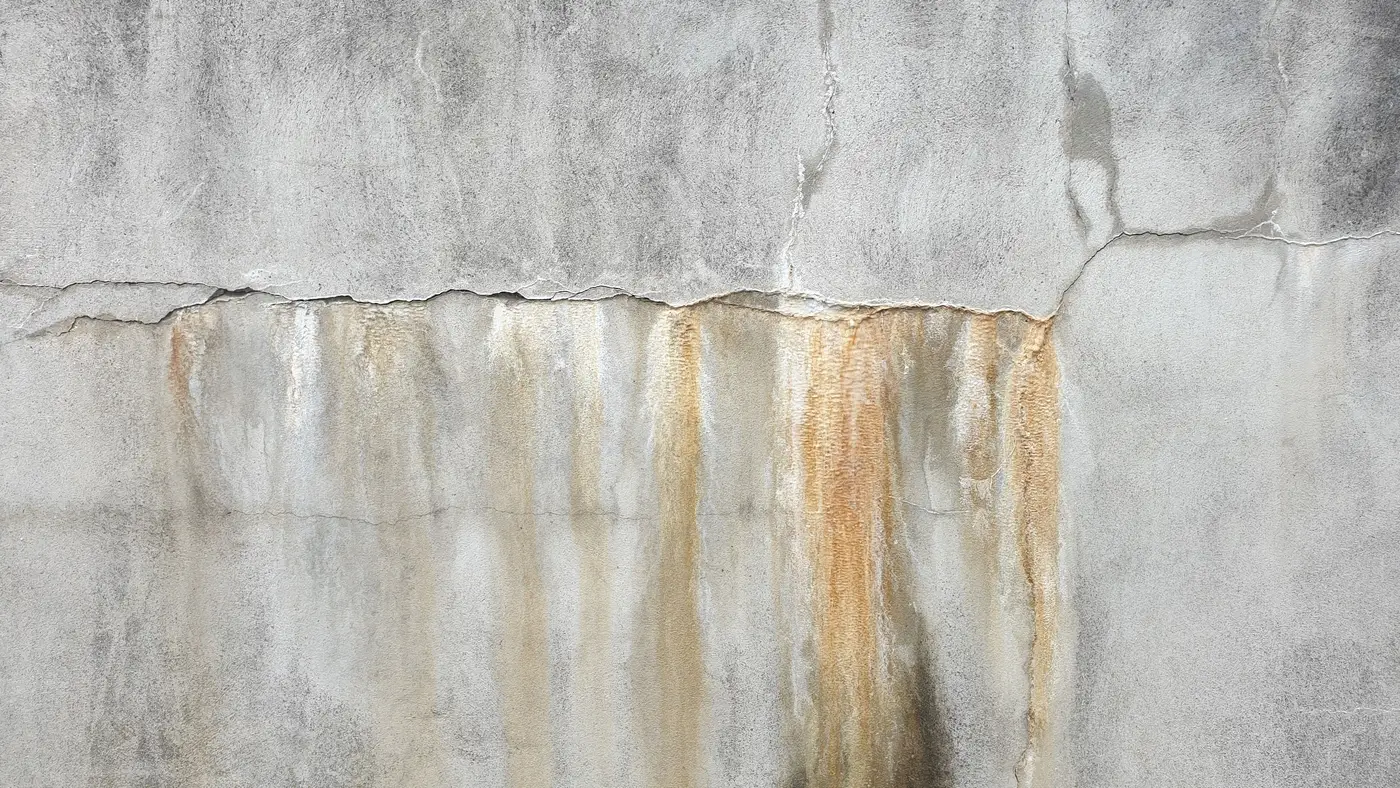
Walk under any bridge deck long enough and you'll see both: pale, chalky deposits in one spot, orange-brown streaks running down a girder a few bays over. They get lumped together as "staining" on a lot of inspection reports, but they're not the same defect, and they don't call for the same response.
White staining: efflorescence and concrete leaching
The white or grayish-white residue you see on soffits, at construction joints, or dripping off a bearing seat is almost always efflorescence. Water moves through the concrete, picks up calcium hydroxide and other soluble compounds as it travels, and deposits them on the surface as the water evaporates. What's left behind is basically the concrete's own chemistry washing out of it.
A light efflorescence stain mainly signals that water is finding a path through the concrete, through a crack, a poorly sealed joint, or a deck drain that isn't doing its job. That's worth noting and tracking on its own. The stain becomes a structural concern when it's heavy, repeats at the same location year over year, or shows up alongside a crack that's visibly widening. That pattern usually means the water path has been open long enough to start leaching cement paste out of the matrix, not just surface minerals, a slower process toward real section loss in the concrete itself.
A field habit worth building: efflorescence tends to sit on the surface as a soft, powdery deposit you can brush off with a hand. If it rubs away easily and the concrete underneath feels sound, you're probably looking at a drainage problem, not a structural one.
Rust staining: rebar corrosion bleed
Rust staining looks different and comes from a different cause. The orange, reddish-brown streaks running down a girder face, pooling at a crack, or bleeding out of a spall are iron oxide, the corrosion product of the reinforcing steel inside the concrete. For that staining to appear, the rebar has already started corroding, and corrosion only starts once chlorides or carbonation have broken down the passive layer that normally protects steel in concrete.
That makes rust staining a more direct signal than efflorescence. It's telling you the reinforcement is corroding at that location, and corroding steel expands as it rusts, which is what eventually cracks and pops the concrete cover off in a spall. If you're seeing rust bleed without a spall yet, that element is often in the window between corrosion starting and the cover concrete failing. That's exactly the condition a structure owner wants flagged before it turns into a bigger repair, often before it's visible from the ground on a standard visual walk-down.
Rust staining also tends to track with known risk factors: expansion joints that leak de-icing salt onto girder ends, bearing areas, deck underside near cracks, anything downstream of a joint that's past its service life. If you already know where your joints leak, you already know where to look first.
Why the distinction matters for inspection planning
Neither stain by itself tells you how bad the underlying condition is. Efflorescence can mean nothing more than a clogged scupper. Rust staining can mean early-stage corrosion, or it can mean the rebar is already badly section-lost under a spall that hasn't broken off yet. The only way to know which is to get eyes on the specific element, close enough to see whether the stain sits over sound concrete or over a crack, a delamination, or exposed steel.
That's the step most owners end up paying for with a snooper truck or a rope-access crew sent to every structure on the list, before anyone knows which ones need the close-up look. A screening pass over the whole inventory first, flagging which elements show staining, spalling, or section loss worth a closer visit, cuts that guesswork down to the structures and spans that warrant rigging access equipment.
If you're trying to figure out which bridges on your inventory have rust bleed worth chasing versus white staining you can leave on the drainage list, that's the gap Structure Screening is built to close.