See the structure before you book the snooper truck.
Today
Every structure gets the truck.
With Structure Screening
The flagged ones do.
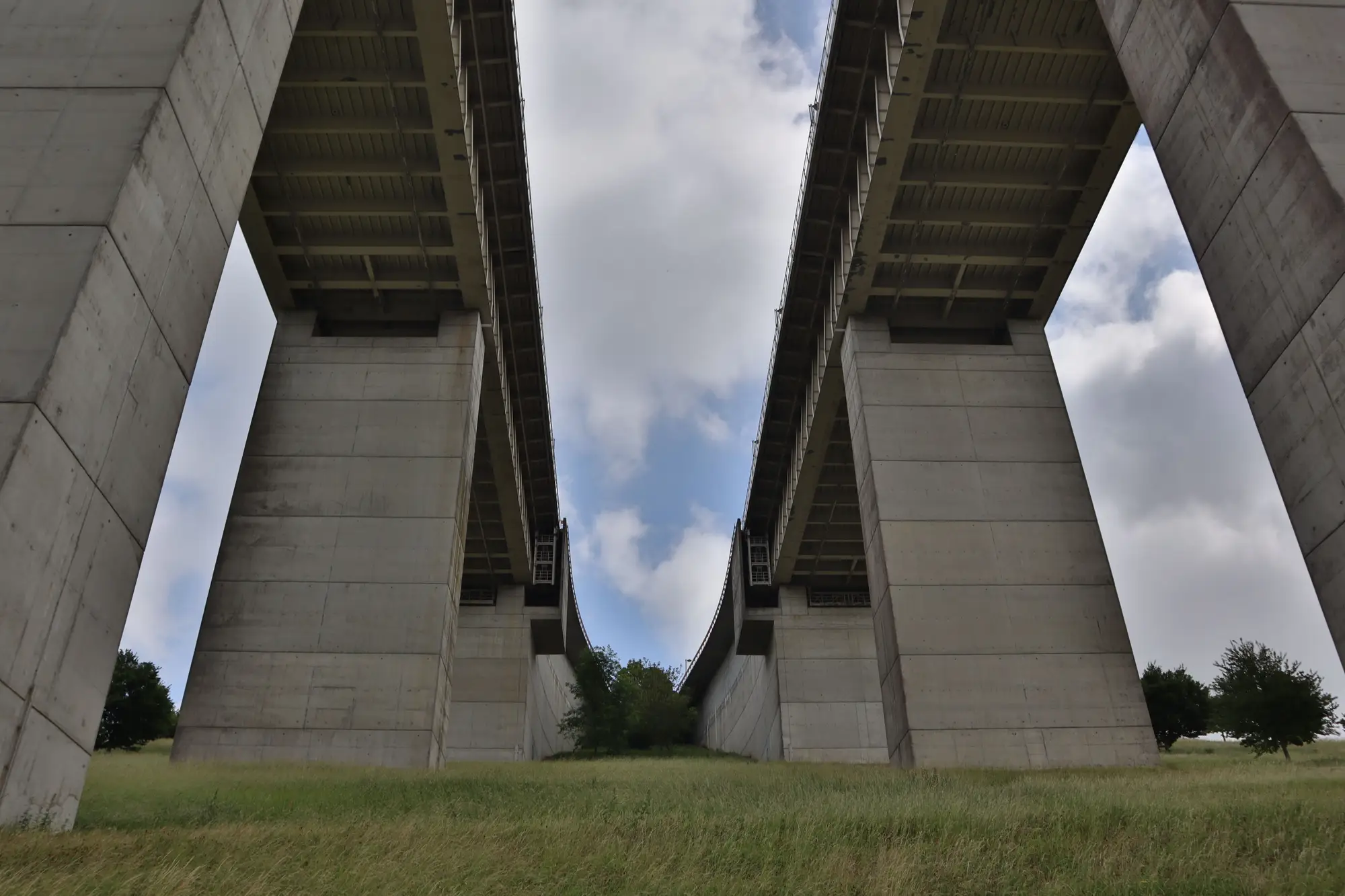
A drone pass flags spalling, staining and section loss on the elements you would otherwise need access equipment to reach. You get the flagged element list before you schedule the cycle.
- GSD
- UAV, under 10 cm
- Cadence
- Annual
- Platform
- Drone / crewed aircraft
- Spectral
- RGB
The job today
Where the truck gets assigned blind
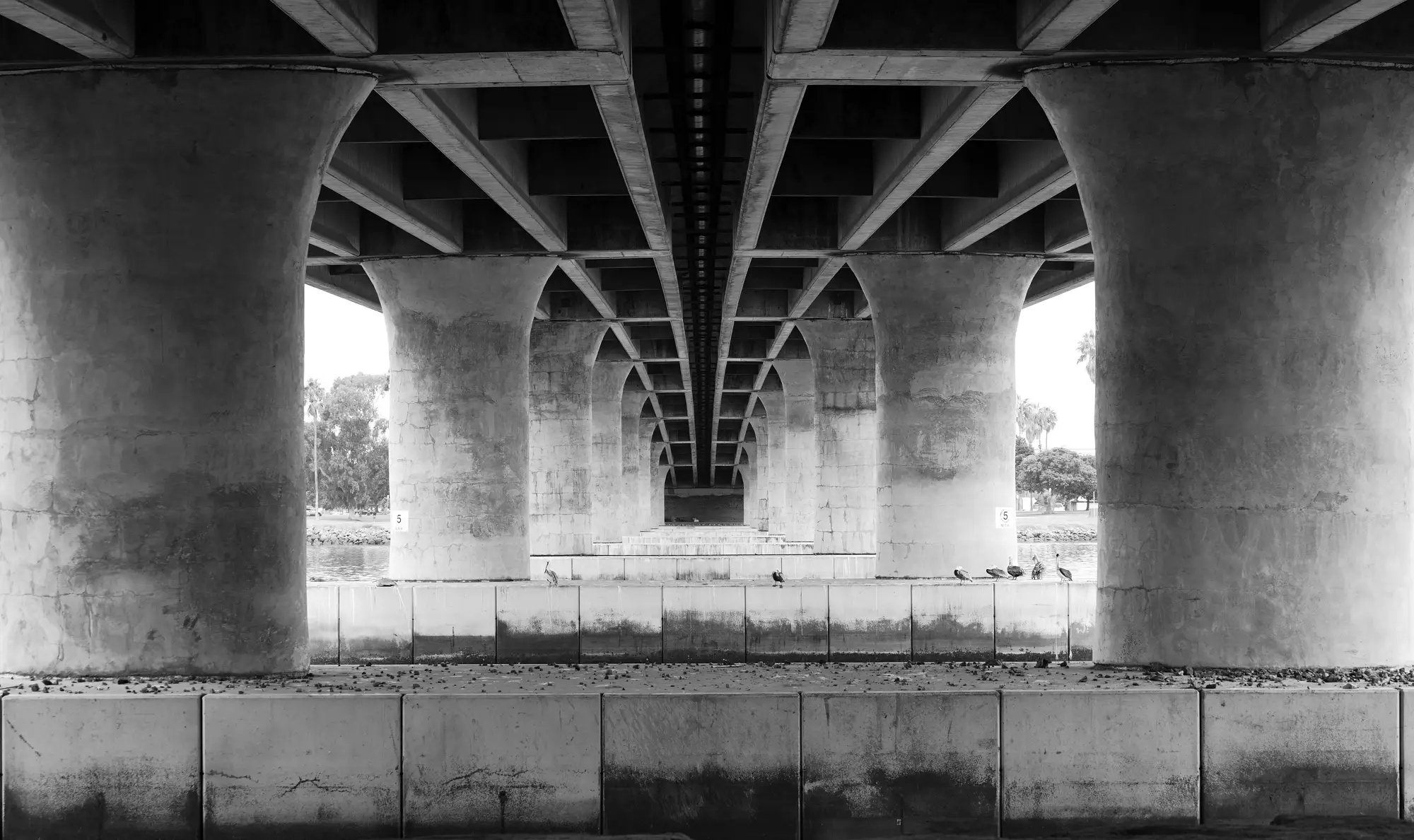
The cycle's inspection list is the whole structure inventory, and the access budget does not cover all of it. Nobody has looked at every deck soffit and pier cap since the last report, so the snooper truck or the rope-access crew goes where that report pointed, or to everything on the list. The lane closure gets booked, the crew gets briefed and traffic control goes out. On some structures the crew hangs under the deck all day and finds sound concrete. On others, the one that needed the truck most gets its turn late.
The cycle, step by step
| Step | Access equipment on every structure | With Structure Screening |
|---|---|---|
| Scoping the cycle | TodayAccess equipment gets assigned from last cycle's reports, the ratings on file and what the budget allows. | With Structure ScreeningA flagged element list per structure shows where spalling, staining and section loss were seen this year, so the list for access equipment starts from a current look. |
| Still yoursWhich structures get inspected, and how. | ||
| Reaching the hard elements | TodayA snooper truck or a rope-access crew goes under the deck to look at soffits, pier caps and bearing areas. | With Structure ScreeningA drone pass looks at the elements it can see first. Access equipment goes to the ones the list flags. |
| Booking closures and crews | TodayLane closures and equipment get booked for the structures you expect to need them, before you know. | With Structure ScreeningThe flagged list arrives ahead of the scheduling, so you book after you have seen it. |
| Recording where the damage is | TodayThe inspector notes the location by element, with a sketch and photos taken from the bucket or the rope. | With Structure ScreeningEach finding carries the structure and element ID, an annotated image and a line in the CSV. |
| Ranking what's worst | TodayThe order comes from the last rating and the inspector's judgement on site. | With Structure ScreeningEach finding carries a relative visual severity flag, so the structures with the worst findings sort to the top. |
| Elements you can't see | TodayAn element hidden from the ground stays unseen until someone reaches it with equipment. | With Structure ScreeningAn element the drone could not see from any angle comes back marked not screened. It is never assumed sound. |
| The inspection and the rating | TodayA qualified inspector inspects the structure, rates its elements and files the report. | With Structure ScreeningThe same inspector does the same work, with our list as one input to it. |
| Still yoursThe inspection, the element ratings, the load rating and every repair decision. | ||
What you get
What comes back for each structure
CSV
Flagged element list
Spalling, staining and section loss, by element. This is the list behind the scoping and booking rows, and it arrives before the cycle's access equipment is scheduled.
Images
Annotated imagery per finding
One image for each flag, marked where on the element the finding is. Attach it to the request for access or to the inspector's field notes.
Ledger04
Flag per finding
Element-level severity flag
A relative visual severity on each finding, for ordering the work. It is not a condition rating and says nothing about capacity.
Ledger05
CSV
CSV export by structure and element ID
Rows keyed to your own structure numbers and element IDs, so they line up with the inventory you already keep.
Ledger04
How it works
Before the cycle opens
Send the structures you want screened and their element lists or reference IDs. For a pilot, pick a handful that span the range you manage.
A drone pass, once a year
We fly the screening pass over each structure, inside your airspace approvals and a weather window that suits.
Elements screened
Each element is checked in the imagery for visible spalling, staining and section loss. Elements no angle could see are marked not screened.
The list lands before scheduling
You get the flagged list, the images and the CSV ahead of the point where you book access equipment and lane closures.
Limits
The old method still sees more
A person close to an element can sound it with a hammer and look inside a joint. A drone pass sees exterior surfaces only. Internal and below-surface defects are outside it.
A floor on what shows
Imagery is flown at under 10 cm a pixel, about 4 inches. Larger spalls, stained areas and visible material loss are what the pass is aimed at. A small spall may only register as a spot, and hairline cracks are not traced.
Some elements stay unscreened
Where no angle reaches an element, it comes back marked not screened, and that one still needs equipment or a different look.
Flight windows
Wind, rain and restricted airspace can stop a pass, and traffic or clearances can limit how close the drone gets. The annual cadence is a target.
It is a screen
It flags where to look. It does not rate the structure, and it does not touch a load rating.
Who it's for
Switch if
- You schedule the cycle's access equipment and lane closures for a structure inventory.
- You want to know which structures need the truck before you book it.
- Your inspectors would use a flagged list as one input.
Stick with the truck on every structure if
- You need a certified condition rating or a load rating from this pass.
- Your structures are all under the same level of scrutiny each cycle regardless of findings.
- You need hands-on sounding or internal checks of every element.
FAQ
Questions before a pilot
Does this replace a certified structural inspection?
No. It is a visual screening pass. Certified condition ratings still come from a qualified inspector.
Can it find internal or below-surface defects?
No. It sees exterior surfaces only.
What happens to an element the drone can't see?
It comes back marked not screened. We do not treat it as sound.
Does severity map to a load rating?
No. The flag marks a visual finding worth an inspector's look. It says nothing about capacity.
How do we check it against our own inspections?
Pick a structure your inspectors have recently done up close. Compare our flagged list with their findings on the same elements.
Will it fit our bridge management system?
You get a CSV keyed to your structure numbers and element IDs. We do not write into your system.
Who owns the imagery and the results?
Ownership and licence terms are agreed in writing when the pilot starts. If your counsel needs them sooner, ask.
How close does the drone get?
Close enough to meet the image size under Limits, where the site allows it. Restricted airspace, traffic or clearances can limit how near a pass gets.
How is it bought and priced?
Pricing depends on how many structures and what kind. Tell us about your inventory and we will scope a pilot to it.
Start a pilot on your structures.
Tell us how many structures are in your inventory and how you reference elements. We will scope a pilot around the cycle you are planning.