How to tell section loss from surface corrosion on a steel girder
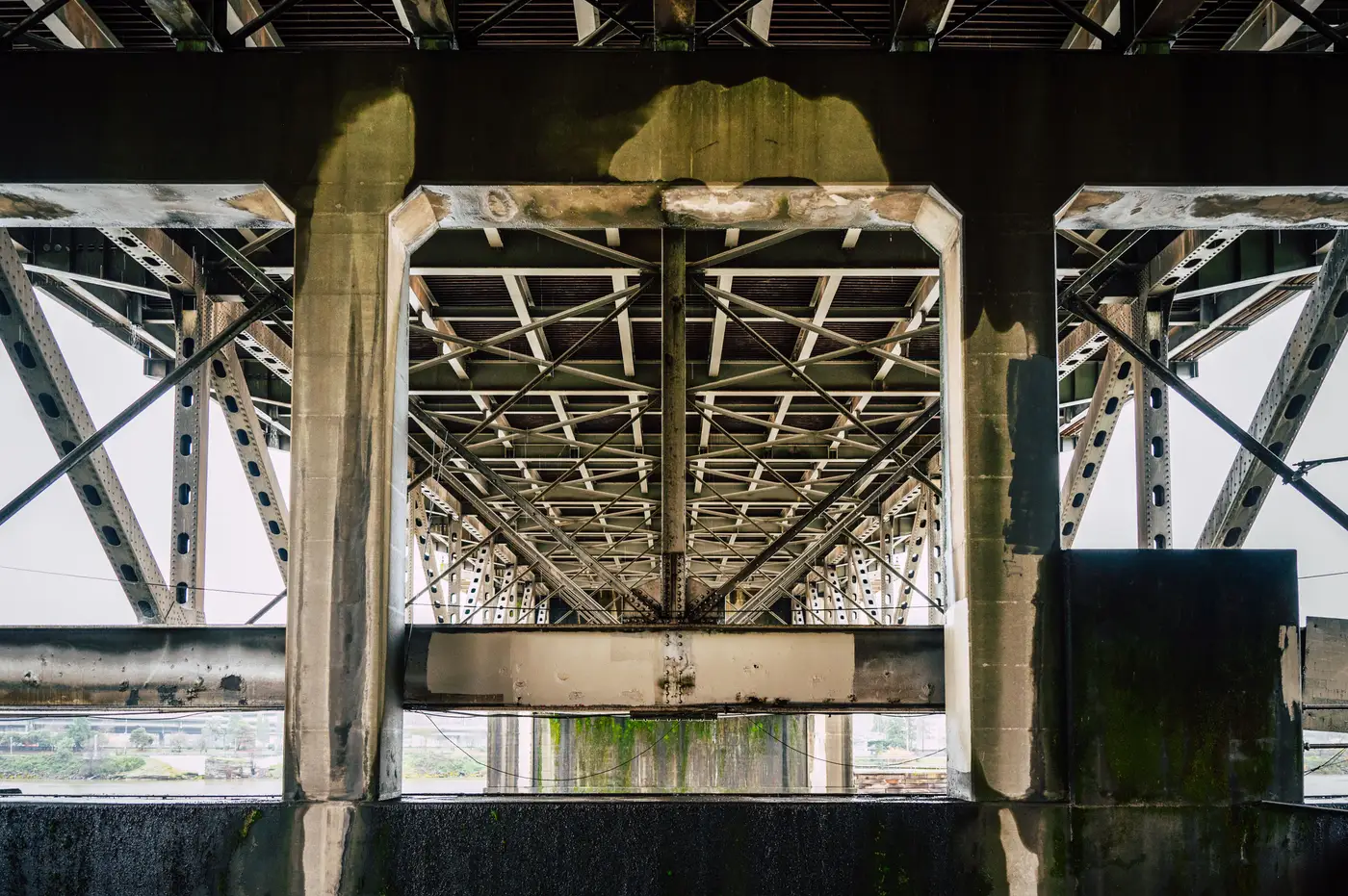
Rust on a girder flange doesn't tell you much by itself. Some of it is surface scale that's been there for a decade and isn't going anywhere fast. Some of it is sitting on top of steel that's lost real thickness underneath. From forty feet away with binoculars, or from a deck-level walk-by, they can look almost identical. The difference matters a lot once you're deciding which elements get a snooper truck or rope crew and which ones can wait another cycle.
What surface corrosion actually looks like
Surface corrosion, the flaking kind, is usually a thin layer of oxidation sitting on sound base metal. It forms where paint has failed or coating never got applied right in a tight spot. You'll see it as a reddish-brown bloom, sometimes with loose scale that flakes off if you run a scraper over it. Underneath, the steel is often still at or close to original thickness. It's ugly, it stains the concrete below the bearing, and it's exactly the kind of thing that gets a structure flagged for coating work. On its own, it's not a strength problem.
What section loss looks like, and why rust color won't tell you
Section loss is different. It's actual metal gone, thinned flanges, pitted webs, perforations at drain points and bearing areas where water sits and keeps working the steel year after year. The surface clue is there, but it's not the color of the rust, it's the texture and the pattern. Laminar rust that comes off in sheets rather than flakes, pitting deep enough to catch a fingernail, a flange edge that's visibly thinner than the web it's welded to. None of that is reliable from a distance or from a photo taken at an angle. Confirming it takes a hammer sounding, a UT thickness gauge, or calipers against the steel, and that means hands-on access.
Pack rust: the one that hides between the plates
Pack rust is its own problem and it's the one that gets missed most often. It forms between faying surfaces, two plates bolted or riveted together, where rust product gets trapped and expands between the layers, pushing them apart. Look for bulging at built-up stiffeners, rivets that have popped their heads, a gap opening up at a gusset plate connection that wasn't there in last year's photos. Pack rust can be doing real structural damage while the visible rust staining looks modest. It's the clearest case of a surface symptom pointing at a problem you can't size up without getting someone next to the steel.
Why this is a screening problem, not a guessing problem
None of this means every rust stain needs a rope crew. It means every rust stain needs someone to look at the pattern and decide. On an inventory of any real size, that decision is usually made the hard way, by sending access equipment to every structure and hoping the ones that actually need it are in the mix. Structure Screening runs an annual aerial pass over the inventory and comes back with a flagged element list, the girders, bearings and connections showing staining, scale, or pack-rust patterns worth a closer hands-on look, so the snooper truck and rope crew get sent to the structures that earned it instead of the whole list. If you're trying to narrow that list down before the next access-equipment season, that's worth a look.