How to prioritize which bridges get rope access first when budgets are tight
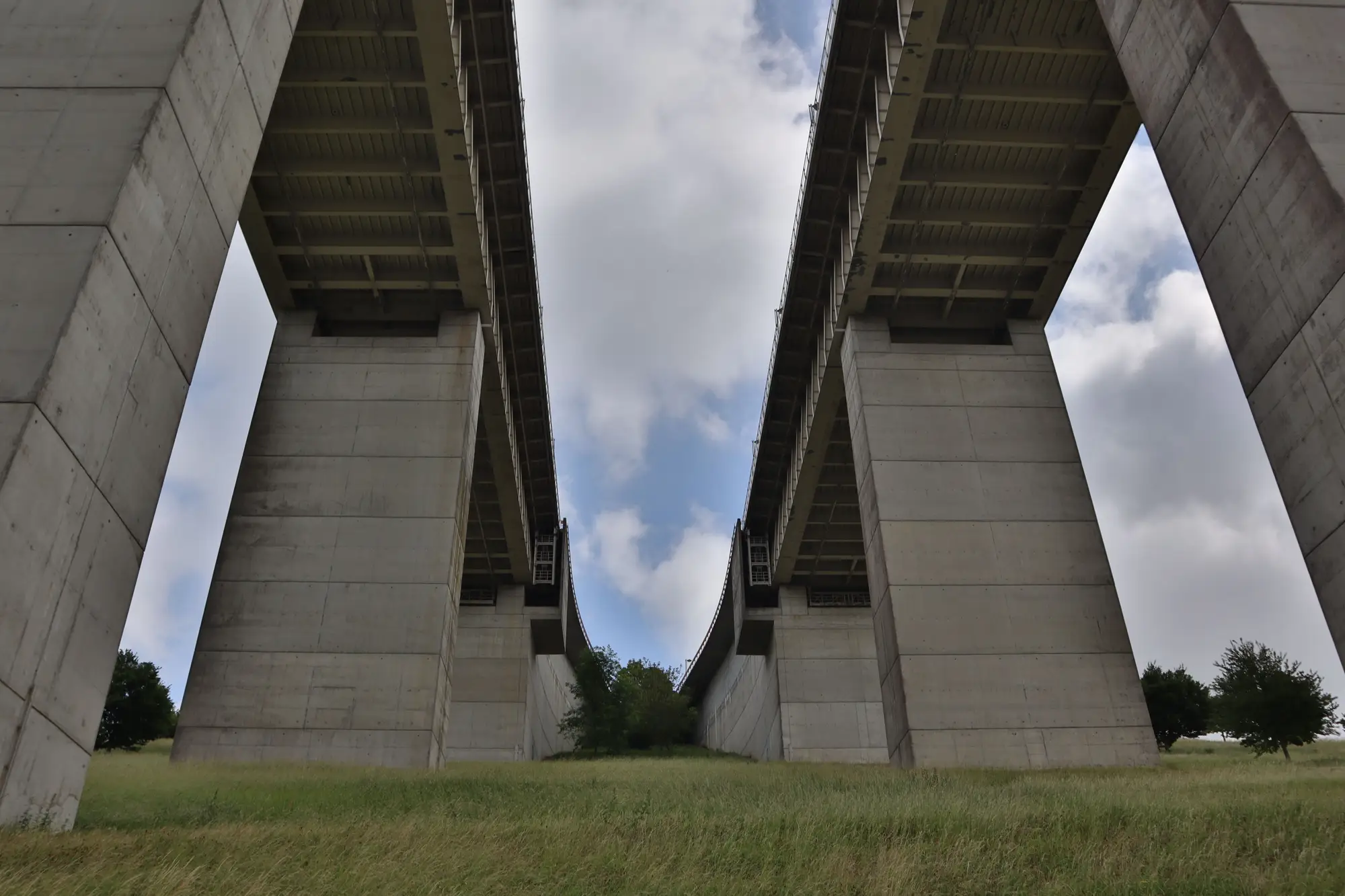
If you manage a bridge inventory of any real size, you already know the math doesn't work. Say you've got 140 structures on a biennial cycle and a rope access budget that covers maybe 25 of them this year with any real climbing time. The other 115 get a drive-by, a pair of binoculars, and a hope that nothing's hiding under the deck.
The real question is which 25 you pick, and how you defend that list when someone asks why Bridge 14 got a crew and Bridge 88 didn't.
What actually predicts a rope access need
Age and ADT get you a starting sort order, but they don't tell you what's happening on the structure right now. A 40-year-old bridge with good drainage and no chloride exposure can outlast a 15-year-old one sitting under a leaking expansion joint. The things that move a bridge up the list are visible: rust streaking down a girder flange, a map-cracked pier cap, efflorescence trailing from a deck joint, a patch that's already spalled again.
The problem is seeing that visible evidence in the first place. From the ground or a bridge deck, you can read the obvious stuff on an abutment or a wingwall. You can't read a bearing seat, the underside of a cantilever, or the top of a pier cap thirty feet up. Those are exactly the elements that end up driving a rope access call, and they're also exactly the elements nobody can see without already having a crew on the rope. That's the circular problem every inspection program manager runs into: you need access equipment to find out if you need access equipment.
A few things worth pulling together before you build this year's list:
- Prior inspection notes flagging "monitor" or "recheck next cycle"
- Any scour or drainage issue that's been open more than one cycle
- Known chloride exposure: deicing routes, coastal spray, runoff from a salted deck
- Maintenance work orders that mention cracking, spalling, or staining, even informally
- Structures where the last rope access pass is older than two cycles
Score each bridge on how many of those apply and you've got a rough tier list before you've spent a dollar on equipment.
Scheduling the crew once you know the tiers
Once you've got tiers, the scheduling conversation with a rope access crew changes. Instead of "work through the list in order," you're telling the crew lead: tier one gets full element-level access this cycle, tier two gets a partial pass on the elements flagged last time, tier three waits. That's a defensible allocation of crew-hours, and it's the kind of thing that holds up when a budget review asks why the spend went where it went.
The gap most programs hit is between "we think Bridge 88 might need it" and "we know Bridge 88 needs it." Without a way to look at the hard-to-reach elements on every structure in the inventory, that gap gets filled with guesswork, seniority of who complained loudest, or just the order the spreadsheet happened to be sorted in.
This is the gap a screening pass is built to close. Running a drone over every structure in the inventory before you commit rope access hours gives you a flagged list of which specific elements on which specific bridges show the staining, spalling, or section loss that warrants a climber, rather than a guess based on age and traffic counts alone. Structure Screening runs that pass annually across the full inventory and hands back the flagged elements, so the tier list going into your rope access budget is built on what's visible on each structure rather than on which bridge has been due longest.
If you're building next year's rope access schedule off a spreadsheet that hasn't been updated with real visual evidence since the last full inspection, it's worth seeing what a screening pass over your inventory would flag first.